Sacred Grounds Defaced: Lincoln Memorial Vandalized with Politically Charged Graffiti
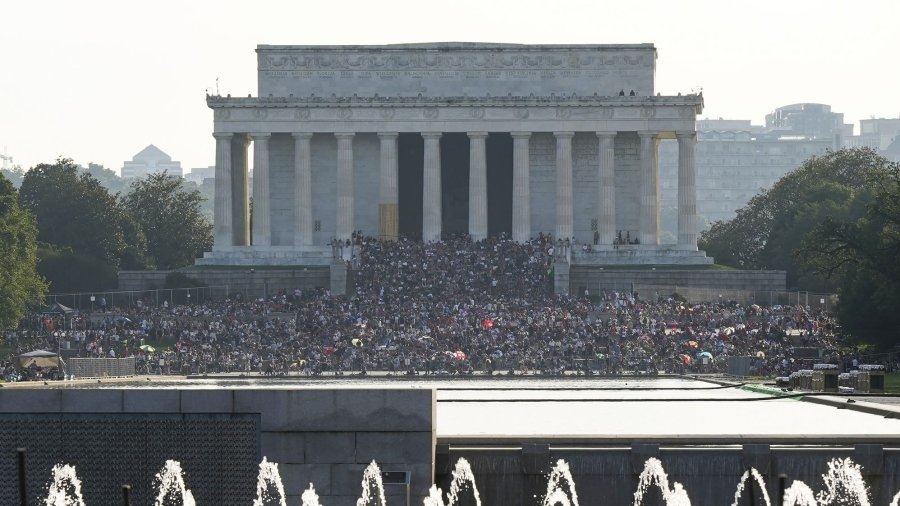
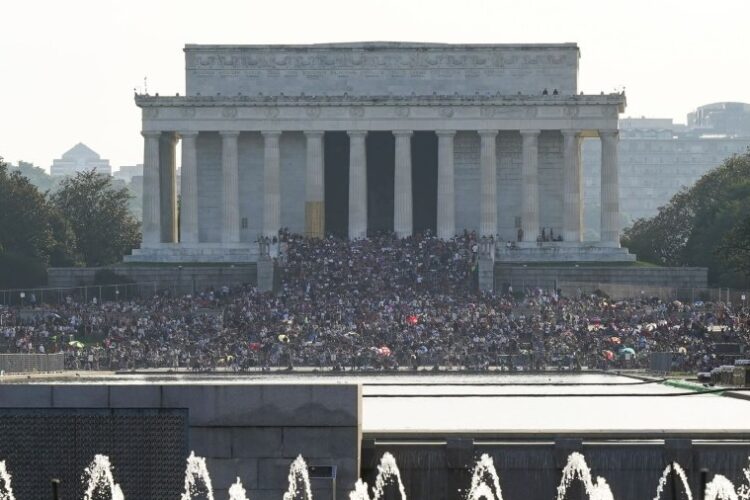
An act of vandalism at the Lincoln Memorial, one of the most iconic symbols of American history and democracy, has ignited a storm of controversy and condemnation. The monument, nestled in the heart of Washington, D.C., was defaced with the politically charged message “Free Gaza,” scrawled in bold red paint.
This provocative act, against the backdrop of the ongoing Israel-Palestine conflict, has added an international dimension to the incident, raising questions about the boundaries of political expression and the sanctity of historical landmarks.
The Unfolding of the Incident
The defacement was discovered on the steps of the Lincoln Memorial, a revered national symbol that commands deep respect. The U.S. Park Police confirmed the act of vandalism and launched an immediate investigation.
Cleanup crews, armed with the delicate task of preserving the monument’s integrity, were dispatched promptly to erase the graffiti and restore the site to its original state.
The Broader Implications
The incident has sparked a broad spectrum of responses, reflecting the importance of the site and the controversial dimensions of the message conveyed through the graffiti. Discussions have emerged about the escalation of tensions and conflicts beyond the directly involved regions, and the appropriate means of political expression.
The National Park Service, tasked with the memorial’s maintenance and preservation, has initiated measures to rectify the defacement, marking the west side of the Reflecting Pool as temporarily off-limits during the cleanup process.
Pattern of Disrespect and Need for Vigilance
The Lincoln Memorial vandalism is not an isolated event; it is part of a disturbing trend of disrespect towards historical and cultural symbols. This recurrent pattern underscores the need for heightened security measures to protect public landmarks and prevent such incidents.
The incident’s political undertones, particularly its link to the Israel-Palestine conflict, have introduced a layer of complexity. The “Free Gaza” message reflects sentiments related to the ongoing war, spotlighting the broader geopolitical implications.
Response and Reflection
The incident’s repercussions have rippled beyond official channels, with public figures, organizations, and individuals voicing their views. Social media platforms have become arenas for both condemnation and debate, reflecting a spectrum of perspectives on using national monuments as vehicles for political messaging.
The episode has also prompted introspection on the impact of such acts and their role in advancing causes or fostering meaningful dialogue. It has further highlighted the need for constructive engagement and respectful discourse in addressing complex geopolitical issues.
The defacement of the Lincoln Memorial has sparked discussions about the nature of political discourse, the sanctity of historical landmarks, and the broader implications of ideological conflicts.
This incident serves as a stark reminder of the complexities involved in navigating sensitive political issues within public spaces, stressing the importance of preserving our shared cultural heritage while promoting dialogue, understanding, and mutual respect.