
Later that day, I began researching the artist, and I was amazed by his work and the hyper-realistic element in each of the faces he depicted in his murals. According to his website, which I translated, Jorit started creating art in 2005 in a more traditional graffiti style around Naples. Less than 20 years later, he is now a world-renowned artist who has been featured in The Guardian, BBC, Middle East Eye, TeleSur, and Euronews.
Semi-legality and the “Human Tribe”
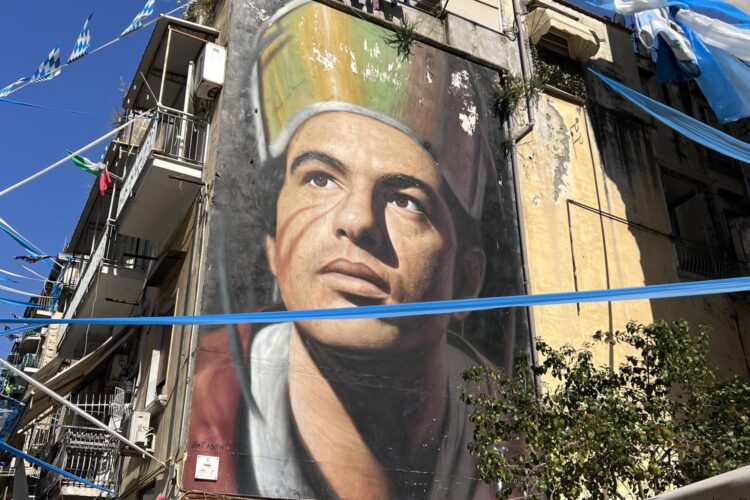
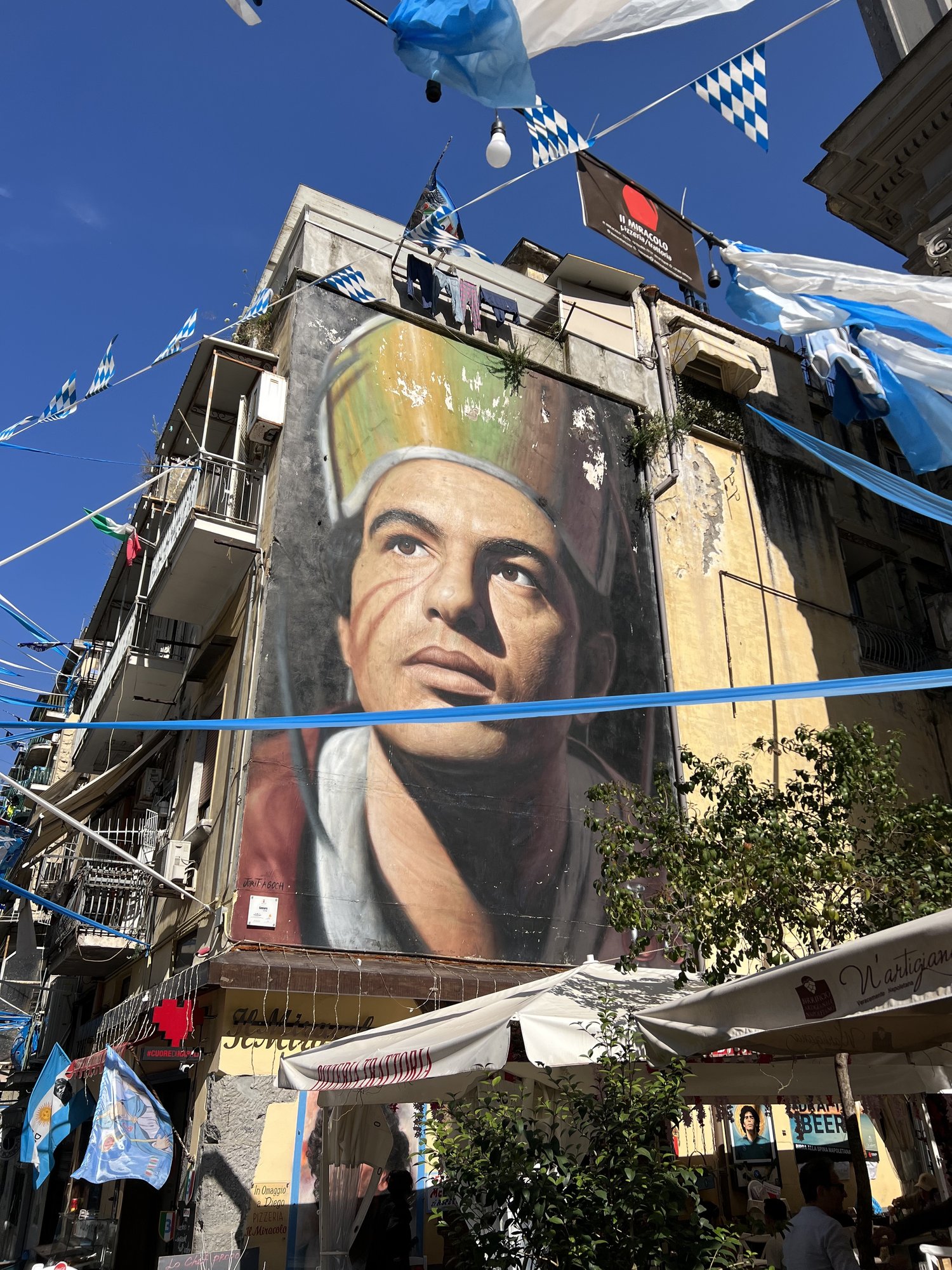
When I was looking through his art, I noticed that the two scars I had seen in the Lucio Dalla mural were present in all of his other murals, including works of Nelson Mandela and Martin Luther King, Jr. Since 2013, Jorit has focused exclusively on the realistic representation of the human face. He explains that the two red stripes on the cheeks reference African magical and healing rituals, particularly in bodily scarification procedures, an initiation rite of passage from childhood to adulthood linked to the symbolic moment of the individual’s entry to the tribe. Jorit creates murals of people relevant to the cities he works in and marks them through pictorial ritual; it symbolizes them entering the “Human Tribe.”
Many artists are drawn to street art because it is free to view and accessible to everyone. Others use the medium to make political statements, and Jorit is no exception. In an interview with the Roman newspaper La Repubblica, Jorit stated, “I don’t believe that street art can change the world, but at least it can shine a light.”
He also explores the idea that his artwork started in the space of “semi-legality,” a concept that exists in Napoli but is also common in Latin America. In the “semi-legal” space, activities such as street art are not technically legal but are unlikely to provoke any legal consequences. Jorit compares his experience to that of the internationally known UK artist Bansky, who always had to think about doing a powerful work of art quickly without getting caught. On the other hand, Jorit can create a beautiful giant mural because it will improve the location, and people around it will accept it.
After building a global reputation, he started doing murals in different countries, such as Spain, Portugal, the UK, the US, and Australia. He is also known for his political activism and being vocal against war. In 2018, he was arrested in Israel for painting a mural of a Palestinian girl on Israel’s “separation wall” in the Bethlehem area.
“We need to start looking”
During my semester in Italy, I visited Naples and saw other famous Jorit murals in person. In an interview with Culture Trip, Jorit reveals the story behind his commissioned mural of San Gennaro, the city’s patron saint. However, instead of painting a likeness of San Gennaro, Jorit asked one of his friends, a factory worker, to pose for his mural. This approach echoes Michelangelo Merisi da Caravaggio’s use of ordinary, everyday street people as models for religious work. While there, I was lucky enough to see this mural, pictured below, in person.