
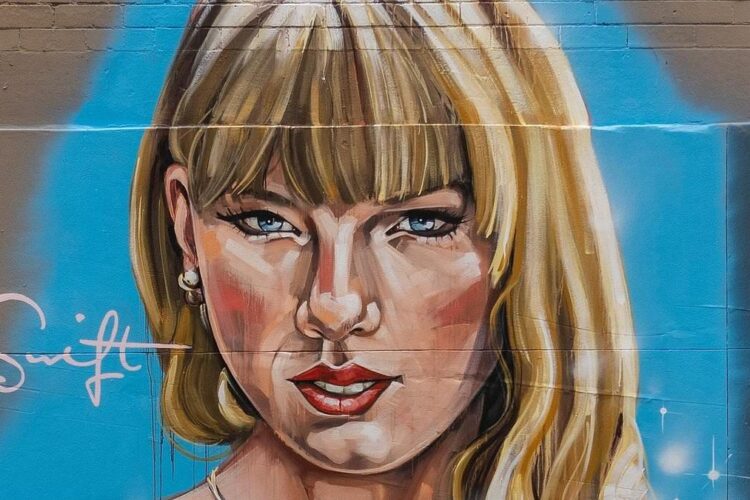
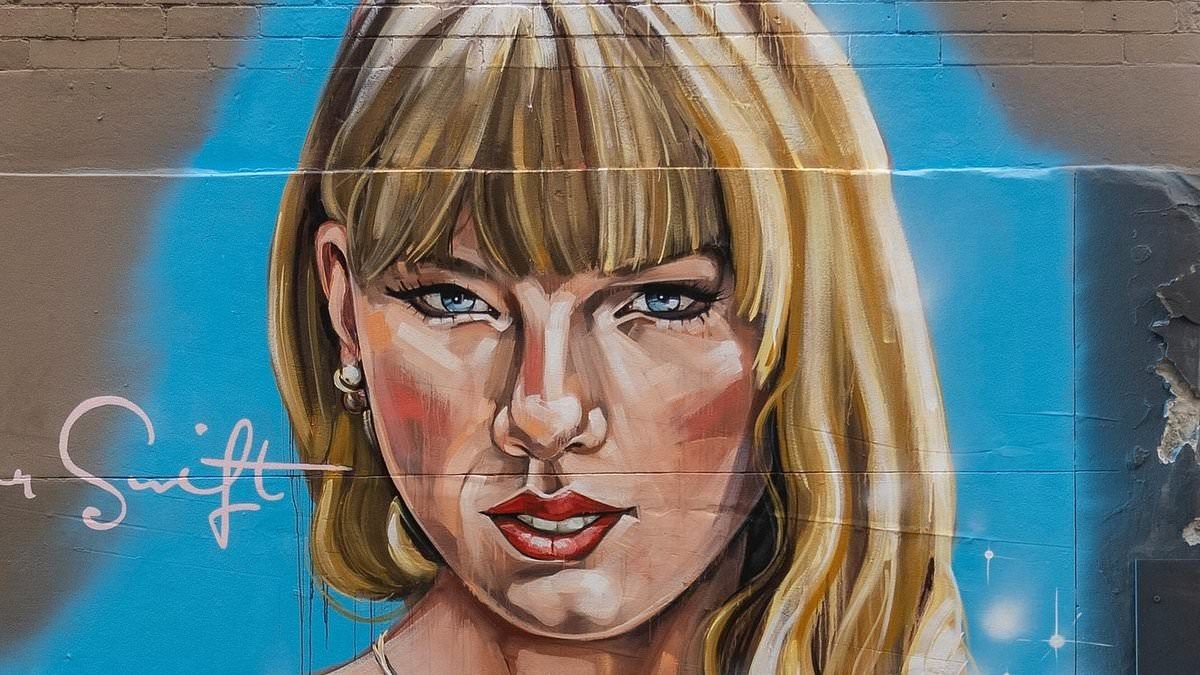
As Sydney’s streets buzz with anticipation for Taylor Swift’s sold-out shows at Accor Stadium, a new mural of the pop icon by street artist Scottie Marsh has ignited a fervent discussion among fans and onlookers. Nestled at the intersection of Little Oxford Street and Crown Street, the artwork showcases Swift in a striking red dress, with a diamond pendant mirroring the number 87—a subtle homage to her NFL star boyfriend, Travis Kelce’s, jersey number. Yet, this artistic endeavor has divided opinions sharply, raising questions about representation, artistic freedom, and the intersection of pop culture and street art.
The Controversy Unraveled
On one hand, admirers of the mural laud Marsh’s work as a vibrant celebration of joy and cultural impact, applauding the inclusion of Swift among the pantheon of figures he’s previously depicted. On the other hand, critics argue that the portrayal lacks the depth and cultural resonance typically associated with Marsh’s subjects, questioning whether Swift’s depiction aligns with the artist’s legacy of painting queer cultural icons. The debate extends beyond the mural’s aesthetics, touching on broader discussions about whom street art should represent and the messages it conveys.
A Celebration Amidst Speculation
Amidst the discourse around the mural, Swift’s arrival in Sydney has only added to the city’s excitement. The superstar, known for her meticulously planned performances and devoted fanbase, is expected to deliver unforgettable shows at Accor Stadium. Speculation about Kelce’s presence in Sydney has been rampant, especially following reports of Swift’s private jet making a special trip to Hawaii, where Kelce was last seen. Fans eagerly await any signs of the couple together, hoping for glimpses of their off-stage chemistry during Swift’s time in Sydney.
Artistic Intentions and Public Reception
Scottie Marsh, known for his thought-provoking street art, often engages with themes and personalities that resonate deeply within cultural conversations. The choice to depict Taylor Swift, a figure synonymous with pop superstardom and public scrutiny, marks a notable shift in subject matter. Marsh’s intentions, whether to critique, celebrate, or simply capture a moment in pop culture, remain a topic of debate. As the mural becomes a backdrop for selfies and social media posts, its reception continues to evolve, mirroring the dynamic nature of art and its impact on public spaces.
The mural stands as a testament to the complex relationship between pop culture, artistic expression, and the communities that engage with them. As Sydney hosts one of the world’s biggest pop stars, the city’s walls reflect not only the face of Taylor Swift but also the myriad interpretations and emotions she inspires among her audience and critics alike. The dialogue spurred by Marsh’s latest work underscores the enduring power of street art to provoke, celebrate, and unite, even as it divides.