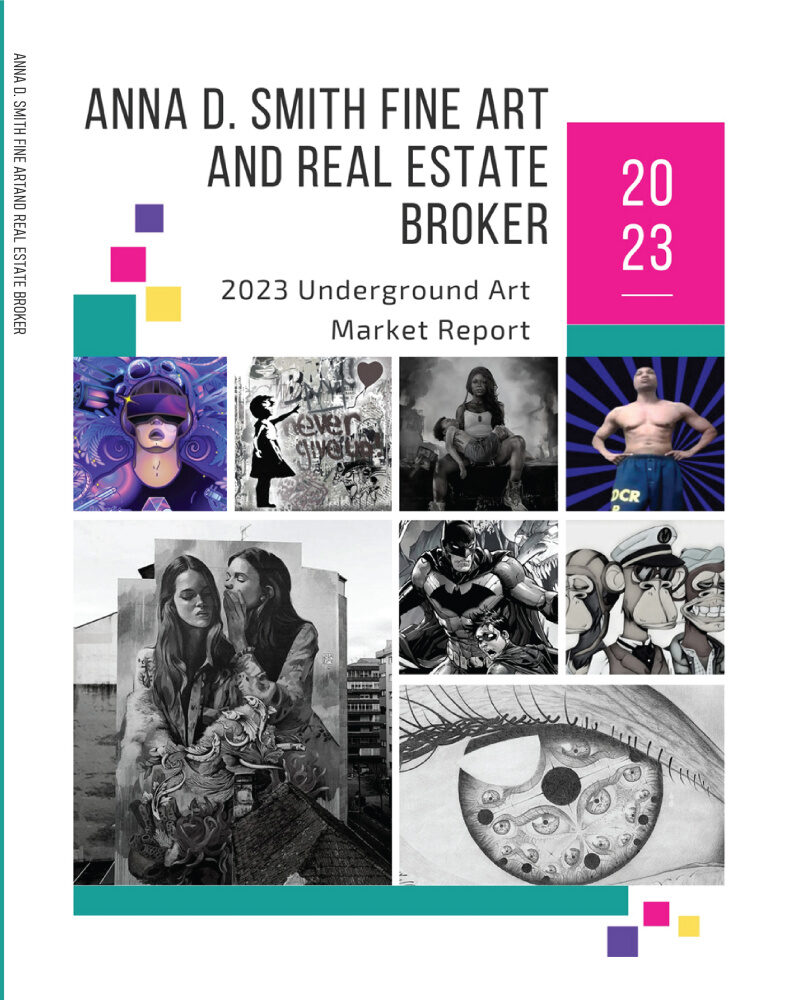
TAMPA — Rafael Blanco, a Spanish artist raised in Madrid and currently residing in Chicago, has emerged as an undisputed figure in the world of urban art thanks to his unique style and passionate dedication with the brush. Beyond being recognized as a talented muralist, Blanco demonstrates his commitment to art and education. He was a university professor, standing out for his work in cultural enrichment.
Thus, through this Spanish painter, street art will have a new protagonist in the city of Tampa from now on. His career, which spans countless murals in various locations across the United States, has captured the attention of the city of Tampa, which is why, after a month of work and changing weather conditions, he inaugurated a new mega-mural this past week at McKay Bay.

For the past month, Spanish artist Rafael Blanco has been working on a massive mural at the McKay Bay Transfer Station that illustrates both city services and its diverse workforce. The mural stands at 62 feet high and is 148 feet wide.
At 62 feet high by 148 feet wide, the artwork stands majestically at the Tampa Transfer Station, a place that, although known for its function as a waste transfer center, now becomes a canvas for artistic expression and inspiration for its workers.
“This used to be gray, it was a place with a boring appearance. Now when the workers come in the morning to their workplaces and see themselves reflected there, their faces change and they smile. They identify with what they see depicted there,” said Blanco proudly as he showed his collection of tools to paint the mural.
From Tennis to Art
Despite his success, art was not his first great passion, he said.
When he emigrated to the U.S. at the age of 19, he did so through a sports scholarship to play tennis. Since then, and being a migrant, he began to traverse a path full of challenges.
However, he is grateful that above all, it has also been a journey of resilience, fulfilled goals, and personal satisfaction.
“I came to this country and like every migrant, you have to earn a living with whatever means. While in the United States, I did gardening, worked in a library, galleries, etc.,” he said.
Despite the initial difficulties with English, he committed to overcoming this barrier and pursuing his passion for art. His determination and dedication ultimately led him to master the demons of local linguistics.
Everything began to change when he was invited to participate in a 24-hour mural marathon in Reno, Nevada. An experience he describes as challenging and that led him to paint continuously for a full day. This event deeply inspired him, as it contrasted with his previous approach to painting, which used to be slower and more meticulous.
The marathon showed him that he could create art more quickly and passionately, sparking his interest in urban or street art, especially through mural creation.
“I’m not a graffiti artist,” he clarified. Making it clear that his thing is the brush.
It was then, in Reno, that the Spaniard began to explore this new artistic path, experimenting with different techniques and styles. His participation in the competition opened the doors to a completely new world and led him to discover his true passion for urban art. Since then, he has continued to grow and develop as a muralist, leaving his mark in every city he visits.
An Art that Connects
The new mega mural at McKay Bay is not only an impressive display of artistic talent but also a tribute to the workers of the waste transfer station.

For the past month, Spanish artist Rafael Blanco has been working on a massive mural at the McKay Bay Transfer Station that illustrates both city services and its diverse workforce. The mural stands at 62 feet high and is 148 feet wide.
It intertwines characteristic elements of the city of Tampa, such as light poles and the rooster that symbolizes Ybor City, and a tractor (partly for the employees, but also for the agricultural areas of the locality). Likewise, there is the presence of emblematic images of downtown buildings and, to top it off, it features graphic representations of the workers themselves. The wall captures the essence and vitality of the local community. Not a single detail escapes him.
As he continues to paint, Blanco highlights the importance of establishing meaningful connections with the communities to which his works belong. He always seeks to reflect multiculturalism and the essence of each place, incorporating elements that resonate with local residents.
It is precisely this emotional connection with the community, especially the Spanish-speaking community, where the positive reception that his work constantly receives from those who contemplate it is evident.
The artist highlighted how impressed he has been to observe a significant change in the community’s attitude toward his artistic work.
“At first, many employees were perplexed to see me painting the walls. However, as the mural took shape, they began to understand the intention behind my art, and we started to connect more and more,” he explained.
The mural includes clear visual references to both the Latino and African-American communities, as well as elements that evoke American and European heritage, offering a broad and varied representation of society. In fact, the mural contains a double-edged representation in its central character, who wears a Tampa city cap on his head and, at times, can be confused with a baseball player and at others with a station worker.
Capturing Attention

For the past month, Spanish artist Rafael Blanco has been working on a massive mural at the McKay Bay Transfer Station that illustrates both city services and its diverse workforce. The mural stands at 62 feet high and is 148 feet wide.
This painter’s artistic technique is highly influenced by classical painting, particularly by the works of the great masters of the Renaissance and Baroque art to which he had access while growing up in Madrid. Although he has experimented with a variety of styles and surfaces, from canvases to walls and floors, his focus is on creating visually stunning and emotionally resonant works. Blanco seeks to bring to life seemingly mundane or lifeless spaces, transforming them into vibrant canvases full of movement and texture. His work stands out for his ability to capture the essence of beauty in the everyday and transmit it through representations ranging from figurative to abstract.
“We have to see beauty in the subjective, and art is very subjective. To make something ugly beautiful. My works are more about creating things that cannot go unnoticed because I always aim to create something visually striking, that captures glances; once I have your attention, then you will look at what is really happening with the mural and you will understand the meaning, what it represents, and what I want to say,” he said.
From Tampa to New York
With each project, Blanco continues to challenge himself and explore new forms of artistic expression. His next stop will be next month in Staten Island, New York. An adventure that promises to be another new opportunity to leave a mark on the urban landscape of the United States. Then he will travel to Maryland. And “let art take me wherever it wants to take me,” he pointed out.
The Spaniard attended Florida Southern College (2000-02) and graduated with a Bachelor of Fine Arts from Saint Mary’s College of California (2002-04). After obtaining his Master of Fine Arts in Painting and Drawing from the University of Nevada, Reno (2010-2013), he worked as a full-time university professor at Feather River College (2014-19) and at Elmhurst University (2019-23), where he taught Drawing, Painting, Art History, among other subjects.
“Once I finish the works, I feel that they are no longer mine but the spectator’s, that is, they no longer belong to me but to the city. Certainly, it is my footprint immortalized there, but it is as if I have nothing to do beyond what the brush is. I have done it, but it’s not about me, nor about my life, and I love that. I like to be a little more low-profile,” the artist emphasized.
To view Blanco’s creation, head to McKay Bay, specifically to the waste transfer station, about 15 minutes from downtown Tampa, at 120 S. 34th St. Admission is free, but you must inform the security personnel that you wish to enter the facilities for the purpose of observing the new mural.