
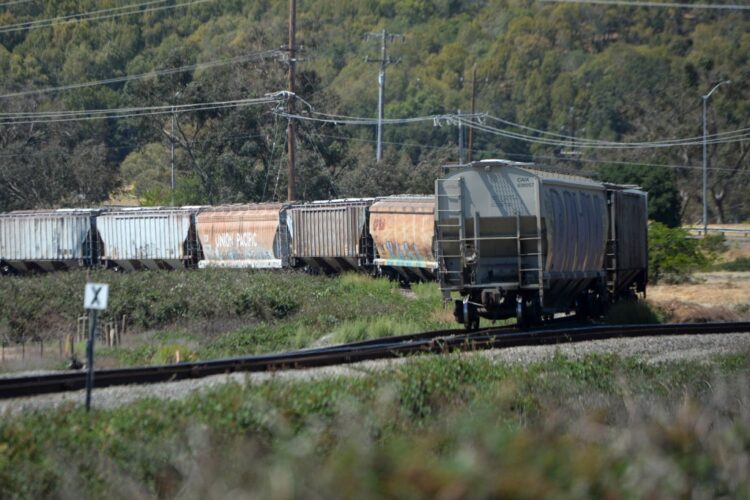
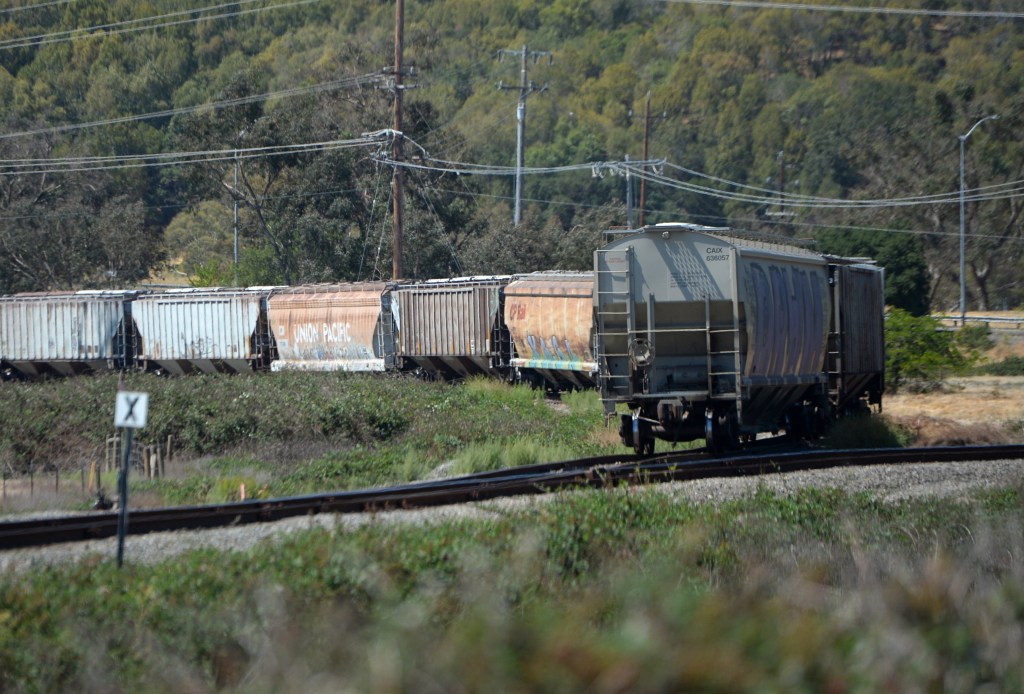
The governing board of SMART has signaled interest in bringing back the practice of storing liquid petroleum gas tankers in southern Sonoma County to address an ongoing deficit in its freight operations.
Such tankers haven’t been stabled at the Sonoma-Marin Area Rail Transit storage facilities since 2021, when the agency took control of North Bay freight hauling operations from Northwestern Pacific Railroad Co.
The agency’s board voted at that time to end the practice after residents of Sonoma Valley and board members expressed concerns about public safety and complaints about graffiti on the vehicles.
After performing a risk assessment and attempting to attract customers to store different types of materials at its yards, the agency has concluded that petroleum tankers are the best option, said Eddy Cumins, the general manager.
“That’s the market in our area, that’s what it is,” Cumins told the board at its meeting Wednesday.
“We have an operating deficit and that’s the bottom line,” Cumins said. “In order for freight rail to sustain itself long-term under the SMART umbrella, we have to find a way to make revenue.”
The decision to end storage of the petroleum tankers cost the agency an estimated $500,000 to $750,000 in annual revenue, which equates to roughly 30% of the freight revenue. This past year, the agency only earned about $7,500 for storage services, despite its significant storage capacity.
The agency is able to store about 160 rail cars at a facility near Schellville and about 40 cars at a storage facility near the Marin County Airport north of Novato.
The district opened the discussion of how to monetize its storage capacity this summer. At a meeting in July, the board directed staff to bring a report back discussing the risk levels of storing tanker cars.
That report was presented Wednesday.
Addressing the safety concern, Cumins said his research revealed no instances of storage-related accidents involving tankers with pressurized gasses. Accidents were related to loading and unloading the tankers or derailments during transportation, he said.
Furthermore, the tankers are fashioned with a release valve positioned at the top of the unit to reduce risk of explosion in the event of a crash or other derailment, he said.
Board member David Rabbitt, a Sonoma County supervisor, thanked the staff for its investigation.
“I think we’ve kind of completed that now, done our due diligence,” Rabbitt said.
“We’re back to having to make sure we do our fiduciary duty and make sure the freight is paying its own way,” Rabbitt said. “It seems that we have a huge opportunity to capture here, and I would be supportive of that.”
The board’s vice chair, Melanie Bagby, a member of the Cloverdale City Council, said community members said the freight is important to the local economy and to reaching the agency’s greenhouse gas emission goals by removing freight trucks from roads.
“It helps make our freeways safer,” she said.
Bagby said she supports storing the tankers “as a bridge commodity so that we can build this business and maintain this business.”
Several residents voice support for the plan.
“Storing freight cars is much more profitable than moving freight cars, so I speak in favor of this,” said Doug Kerr of Sonoma County.
Matthew Hartzell, director of planning at WTB-TAM, a bicyclist and pedestrian advocacy group, said it’s a good move.
“These tanker cars, they’re going to be stored somewhere, and if they’re not stored in rail yards they’re going to be in trucks on our highways, where they’re going to create greater risk to the public,” Hartzell said. “And if SMART is not making revenue and has to sell off its freight business, then a private freight operator is going to take over and then they’re going to be storing these cars. I feel the most comfortable with SMART in control.”
Norman Gilroy, who lives near the Schellville yard, had a different view.
“It isn’t a question of low risk all the time, it’s what happens when that one event takes place,” Gilroy said. “We’re talking about life and death here in the worst case. I support SMART, but in this case, if you do this kind of thing, Sonoma Valley is not going to support you.”
On Wednesday, board members directed staff to bring another report back with more information about safety, but this time with the input from fire officials and hazardous materials professionals.
“I think there’s more info still to be gathered and another hearing or two before a decision is made,” said board member Deborah Fudge, who serves on the Windsor Town Council.
Cumins said eventually staff will return to the board for approval of a recommended plan detailing what can and cannot be stored in the agency’s yards.