
Iowa State University’s Professor David Peterson teaches a course titled Political Science / Sociology 334: Politics & Society, which “examines how movies, music and memes have been inspired and influenced by American politics. Influence of the trends has grown with the rise of social media and mash-up culture, with specific topics on American politics, gender and sexuality and race and ethnicity,” Iowa State’s Daily Benjamin Melody, recently reported.
He’s teaching the course “through comic books,” Peterson told Melody. “People are vaguely familiar with the Marvel movies, but comic books are something a little different. Marvel has been telling a story, the same narrative, for 60 to 70 years. The same characters are there, dealing with similar issues, and these characters evolve over time. And the way that they’ve evolved can help us understand how society has evolved.”
In 1938, in Action Comics #1, Jerry Siegel and Joe Shuster, two guys from Cleveland, revolutionized comic books with the publication of a story called Superman: Champion of the Oppressed. Forty-one years later, in the wake of a meltdown at Three Mile Island, the founding of the Moral Majority by the Rev. Jerry Falwell, the murder of gay politician Harvey Milk in San Francisco’s City Hall, the Iranian hostage crisis, and the impending election of Ronald Reagan, Seth Tobocman and Peter Kuper, who also grew up in Cleveland and knew each other since the first grade, were ready to launch a home for political comics, graphics and stirring personal stories.
Tobocman and Kuper constructed a relatively simple, yet monumentally difficult game plan: Develop an outlet for their own work that emphasized their politics; create a space for like-minded artists and politicos whose voices needed to be heard; and, of course, make enough money to keep the presses rolling.
“The undergrounds were mostly gone, and the alternative movement didn’t exist yet. Since we’d done zines, the idea of self-publishing wasn’t remote. Beyond publishing our own work, we also wanted to print work that moved us – much of it was on the street posted on walls and lampposts,” Kuper said in an interview posted at CBR.com. “It was work that was talking about our reality in 1979 with a hostage crisis in Iran, the Cold War in full swing and a B-actor about to have his itchy trigger-finger on the nuclear launch button.”
The result was the magazine “World War 3 Illustrated,” a collective of artists that created a home for political comics, graphics and personal stories.
The Comic Book Golden Age of 1960s & ’70s
Flash back to the mid-1950s: Raye Ellen, one of my downstairs Bronx apartment building neighbors, set up a comic book lending library. The process was simple: Fill out an index card with your name, phone number and apartment number, choose the comic books you wanted to borrow, list them on your index card, and take them home for up to two days. If you didn’t return the comics on time, there’d be no more comics for you!
It’s been a long time since I’ve been a dedicated a comic book fan. These days, I read the San Francisco Chronicle’s Sunday comic section and its two pages of comics just about every day. Over the years, I’ve read and reviewed a handful of graphic novels and graphic journalism. The late Bob Callahan, who edited several cartoon anthologies, most notably The New Smithsonian Book of Comic-Book Stories from Crumb to Clowes (2004), taught me a lot about the history and value of comics.
In his Introduction to The New Smithsonian Book of Comic-Book Stories, Bob Callahan discussed the rise of America’s comic book industry: “The current era in American comic book history swung boldly into place one brilliant San Francisco morning in the late 1960s, when an odd-looking man [Robert Crumb] . . . began to sell his own self-published comic book, Zap Comix. . . . The comic book itself was only about 30 years old when Crumb came along and rearranged it.”
Comic books about fighting the Nazis and Japanese during World War II – read by millions heading off to war – were a new development as “Over the years, the comics more often responded to the spirit of disorder – to the divine virtues Sedition, Anarchy and Mischievous – than to the need to put anybody’s house back in order.”
Many modern-day comic-book illustrators and writers stand on the shoulders of Harvey Kurtzman, who is known for his “pioneering antiwar stories,” and brilliant “send-ups and parodies that made MAD Magazine the most celebrated comic of all time. Kurtzman stood up against Senator Joseph McCarthy’s anticommunist witch-hunts.
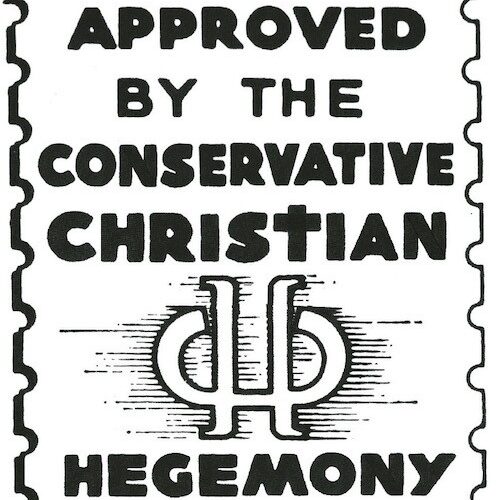
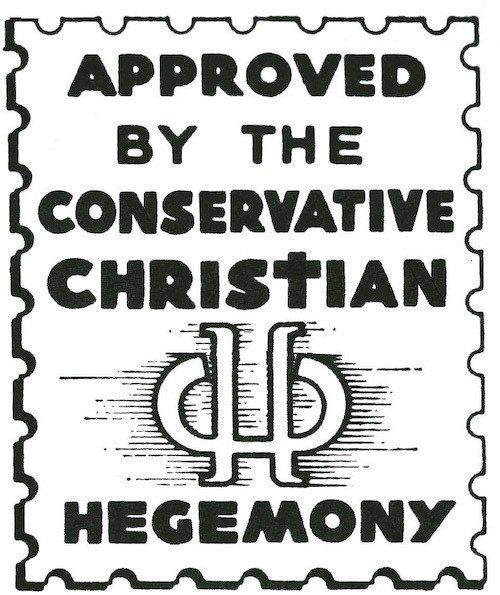
In 1954, The Comics Code Authority, a result of almost daily newspaper tirades “connecting crime comics to juvenile delinquency,” led to publishers dumbing down the comic book. A seal on a comic book’s cover stating “Approved by the Comics Code Authority,” was aimed at protecting America’s youth from smut, profanity, obscenity, and/or communism. Comics were forced underground, and, according to Callahan, “it was 12 years . . . before open, smart and adventurous comics surfaced again.”
By the mid-1960s, alternative newspapers across the country “threw open their doors to certain new and radical perspectives in art and politics.” From New York’s Lower East Side to San Francisco, from Crumb’s Zap Comix to artists such as Bill Griffith, Rick Griffin, Frank Stack and Joel Beck, young artists and illustrators pursued their passion with a free hand and, well . . . an unbridled passion. Through the work of Justin Green, Spain Rodriguez, Gilbert Shelton, Kim Deitch, Carol Tyler and Harvey Pekar, “the undergrounds discovered their own literary destiny.”
From the earliest days of comics, numerous women artists have been integral to growing the art, working as editors, inkers, storytellers and artists: Emma C. McKean was a contributor to New Comics #1 and was the first woman to contribute original comics material to a comic book; Elizabeth Holloway Marston helped create Wonder Woman; the work of Roz Chast, a New Yorker staff cartoonist can be found in The Party After You Left: Collected Cartoons 1995-2003; Alison Bechdel created the long-running comic strip “Dykes to Watch Out For”; and the alternative comic world is full of women storytellers and artists.
Stan Lee’s brigade of Marvel superheroes, – the Fantastic Four, Spider-Man, the X-Men, and so many others – led Marvel to “become the most popular comic book company in the world.” Art Spiegelman’s brilliant Maus: A Survivor’s Tale, “which dealt with his father’s tortured memories of life in Hitler’s concentration camps,” won Spiegelman a Pulitzer Prize.
Peter Kuper told comicbookresources.com that when he and Seth Tobocman arrived in New York, they “were still fans of comics and had become serious about creating them, but there were few venues to get our work published.”
Seth Tobocman was “spurred” on by the Iran hostage crisis: “I knew a lot of Iranian students who were at school with me. So I knew about how the Shah of Iran was put in by the United States and how my Iranian friends were afraid of the Savak, the Iranian secret police, even while walking around NYC. So when the Shah fell and Iranians took over the US embassy, I understood why they did that. But for many Americans this was an outrage, like 9/11, and there was this wave of patriotic hysteria. So I felt, if all these ignorant people can express themselves, so could I. I decided to throw my hat in the ring.”
[For a list of graphic novels focusing on politics, see (https://bookriot.com/graphic-novels-about-politics-and-identity/)]
Since the earliest publication of comic books, story lines have dealt with real world issues and themes, while characters have struggled with those events as well as their own internal conflicts. Iowa State Professor Peterson who confessed to “lov[ing] comics as a kid, [and who] stopped for a while and then started reading again,” believes that using comics provides as portal to “understanding society,” and gives students “the tools to understand bigger questions about society.”