
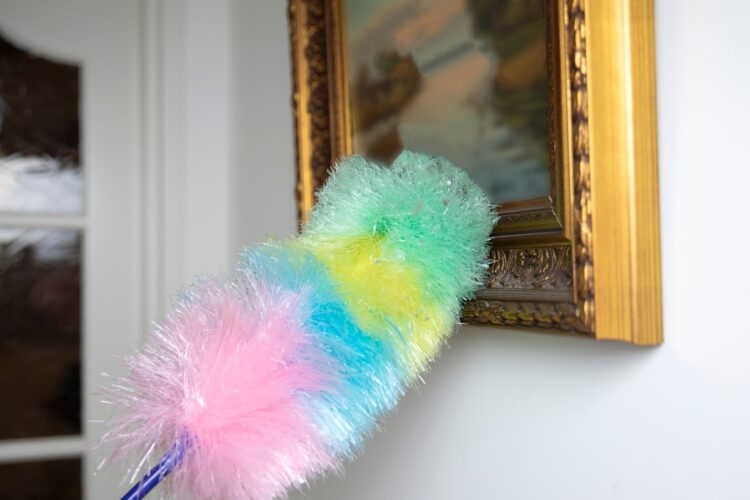
Oil paint is made up of pigments held together in an oil solvent. That bond can be broken if it’s exposed to the right reagent. Several chemicals should never be used to wipe your paintings due to the risk of altering the paint and ruining the artwork. Even if your painting is extra dusty, resist the urge to use harsh chemicals on it, even water. Liquids such as alcohol, acetone, and even water can potentially do some damage.
Furthermore, stay away from using soaps and detergents as these are known to dissolve oils. Ammonia is also a strict no-no, as is vinegar. If you pay attention to your painting regularly, then you will know when it needs to be dusted so that it doesn’t experience a grime buildup which would necessitate heavier cleaning.
Additionally, there are things you shouldn’t do around your piece. You should refrain from smoking around your painting. This includes bringing candles close to it or even positioning it near a fireplace. Smoke leaves soot residue and the last thing you want is a blackened painting. Also, try to admire it with your eyes and not your hands. Your fingers have oil glands that produce sebum, an oil. Several types of bacteria and other micro-organisms exist on your fingertips and palms. Transferring them to the painting through continuous handling will only ruin its integrity.