Get ready, digital artists and designers! 2024 is poised to be a groundbreaking year for artificial intelligence (AI)-powered tools. It will revolutionize the way we create and express ourselves. From mind-bending image generation to hyper-realistic animation, the boundaries between human and machine artistry are about to blur like never before. So, if you want to uncover the top AI tool launches catered to digital artists and designers, you’re at the right place.
In this extensive list, we’ll unveil the top five most anticipated AI tool launches that promise to transform your creative workflow, unleashing your imagination and pushing the limits of what’s possible. Brace yourselves for a whirlwind tour of cutting-edge technology, where AI becomes your ultimate creative collaborator.
Anticipated AI tool launches for digital artists and designers in 2024
Here are some of the most buzzworthy AI tool launches on the horizon that will significantly impact digital artists and designers.
1. Bard Advanced: The future of AI tools
Gemini Ultra in Bard Advanced – Image via Google
The launch of Bard Advanced in 2024 represents a significant upgrade to Google’s generative AI chatbot. Bard is currently powered by Gemini Pro, enhancing its reasoning, planning, and understanding capabilities.
Later, Bard Advanced will leverage Gemini Ultra. This upgrade marks a substantial quality improvement for Bard, offering more robust and diverse AI interactions. Before its broad release, a trusted tester program will be implemented. Additionally, extensive safety checks are planned.
Features of Bard Advanced for automation in digital art and design
- Text interaction: It enables robust engagement with written content, allowing users to create, edit, and interpret text effectively. This feature is especially helpful in creating image prompts.
- Image interaction: This feature allows for the sophisticated handling of images, empowering users to recognize, edit, and generate visual content. Users can also engage in 3D modeling. This opens up vast possibilities for creating and manipulating digital art in real-time.
- Audio interaction: Users can interact seamlessly with audio elements, encompassing capabilities like voice recognition, music creation, and audio editing.
- Video interaction: Bard Advanced facilitates advanced engagement with video content, including capabilities for editing, understanding, and generating videos.
- Code interaction: It supports users in understanding and generating code, offering a platform for interacting with and creating software at a programming level.
- Enhanced collaboration with AI: The platform offers enhanced collaboration features. It provides sophisticated suggestions, ideation, and a deep understanding of complex artistic concepts. This facilitates a more intuitive and productive partnership between the artist and the AI, leading to enhanced outcomes.
For those starting out in digital art, learn five ways beginners can use Google Gemini to enhance your art and design projects.
2. Apple GPT’s launch in 2024

The launch of Apple GPT as an AI tool for digital artists and designers – Image via Apple
Apple is reportedly working on a generative AI chatbot internally referred to as “Apple GPT.” It is expected to be unveiled in 2024. This initiative is part of Apple’s broader efforts to enhance its conversational AI capabilities.
It’s reported that the chatbot functions similarly to Bard, ChatGPT, and Bing AI. Apple’s AI framework “Ajax,” is based on Google’s Jax and powers its proprietary large language model (LLM) hosted on Google Cloud. This LLM facilitates the generation of conversational and creative content, ranging from text to images and music.
Emerging tech for creatives in the form of Apple GPT
- Advanced AI tools for image generation: Artists could use Apple GPT to create intricate and detailed images. This will significantly reduce the time and effort required for visual content creation.
- Style transfer capabilities: This feature would allow users to apply distinct artistic styles to their works effortlessly. Consequently, it enables rapid experimentation and creativity.
- Design ideation: Apple GPT could assist in the conceptual phase of design, offering suggestions, inspirations, and insights to help artists and designers conceive novel ideas.
- Intuitive interfaces: The system could provide user-friendly interfaces. This will, in turn, simplify complex tasks and make advanced design techniques more accessible to artists of all skill levels.
- Secure data handling with a focus on privacy: With Apple’s commitment to user privacy, artists might benefit from secure and private data handling. This will ensure that their content and personal information are protected while they leverage the capabilities of AI.
3. Stable Diffusion version 3.0: Creative AI for artists/designers
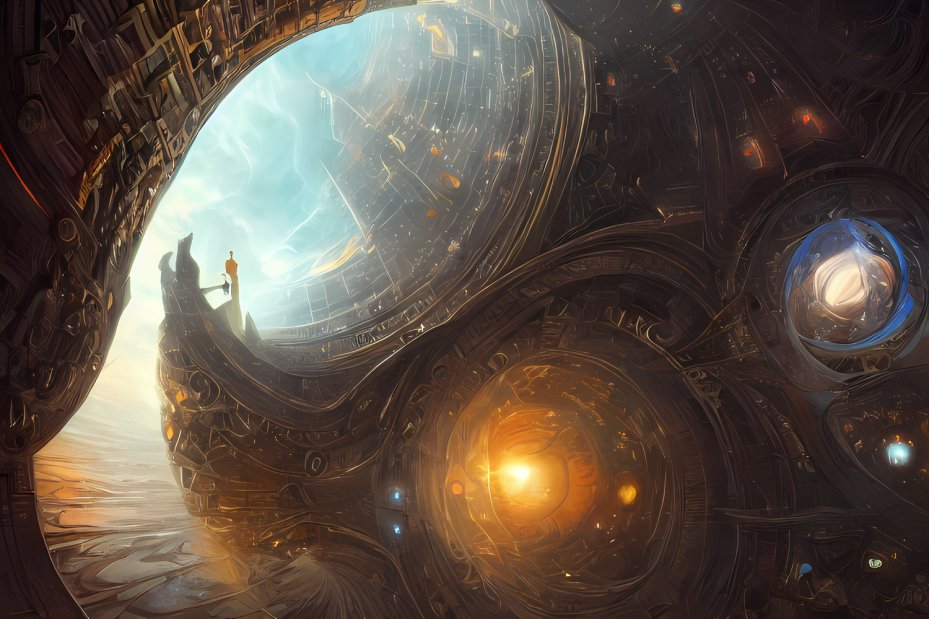
Upcoming advancements in Stable Diffusion – Image via Stability AI
Based on the success and capabilities of Stable Diffusion 2.0, the release of Stable Diffusion version 3.0 could be a monumental step forward in AI-driven art creation. If released in 2024, this version is expected to build upon the robust foundations laid by its predecessor, which was released in November 2023.
With a commitment to enhancing quality, resolution, and speed, Stable Diffusion 3.0 could represent the new pinnacle of text-to-image technology, enabling artists, designers, and hobbyists alike to generate stunning, high-resolution images with unprecedented ease and flexibility.
What can you expect from Stable Diffusion 3.0?
- Enhanced resolution models: Firstly, version 3.0 might offer even higher default resolutions, potentially reaching 4096×4096 pixels or beyond. This will allow for incredibly detailed artwork.
- Advanced text encoder: An evolution of OpenCLIP or a new text encoder could provide a more nuanced understanding and representation of textual prompts. It will lead to more accurate and high-quality image generation.
- Depth2Img 2.0: An updated depth2img feature could include more advanced depth perception and manipulation capabilities. This can offer new layers of creativity and realism in generated images.
- Improved inpainting models: Enhanced text-guided inpainting might allow for more precise and natural modifications. Moreover, it will enable users to alter or improve sections of an image with greater control.
- Performance optimization: Further optimizations might make Stable Diffusion 3.0 even more accessible, potentially running efficiently on lower-end hardware or enabling faster generation times without compromising quality.
- Expanded training data: Utilizing an even larger or more diverse dataset could also improve the model’s understanding and representation of various styles, subjects, and cultures.
4. Adobe Sensei: Enhancing human-AI collaboration
Machine learning and design in Adobe Sensei – Image via Adobe
Adobe Sensei is the AI and machine learning (ML) engine that powers many of Adobe’s creative and marketing applications. It aims to amplify human creativity and deliver better customer experiences by automating tasks, suggesting improvements, and providing insights.
The platform has continued to evolve since its inception. Additionally, we can expect to receive substantial updates in 2024. Sensei’s advancements are expected to touch various aspects of Adobe’s suite, Photoshop, and Premiere Pro to InDesign, and even targeted marketing campaigns.
Anticipated updates to Adobe Sensei in 2024
- AI-powered composition tools: Adobe Sensei will likely transform the way layouts are created in Photoshop or InDesign, offering dynamic suggestions tailored to users’ content and style preferences.
- Content-aware magic: Users can expect smarter object removal and background replacement capabilities, along with seamless image generation that synthesizes with existing elements in their projects.
- Personalized style transfer: Sensei might also enable users to apply the artistic styles of renowned painters or their own custom style to photos and videos.
- Automated video editing: Sensei is anticipated to take over tedious video editing tasks, including scene detection, color correction, and adding transitions. This will allow creators to concentrate on storytelling and creative aspects.
- Smart audio editing: An important thing to look forward to is being able to transcribe and edit audio recordings effortlessly. Additionally, it might incorporate automatic speaker identification and sound effect suggestions.
- Predictive project management: Sensei could provide valuable insights into project timelines and potential issues. It can help users optimize workflows and foresee challenges.
- Hyper-personalized customer experiences: Adobe Sensei is expected to enable the creation of marketing campaigns that adapt in real-time to individual user preferences and behaviors, offering a truly personalized experience.
- Advanced analytics and reporting: Furthermore, enhanced analytics and reporting features will likely provide deeper insights into audience and campaign performance. This can assist marketers in making informed, data-driven decisions.
Compare two leading AI art tools by reading our detailed comparison between Adobe Firefly and Midjourney for 2024.
5. LeiaPix: The ultimate AI 3D animation platform
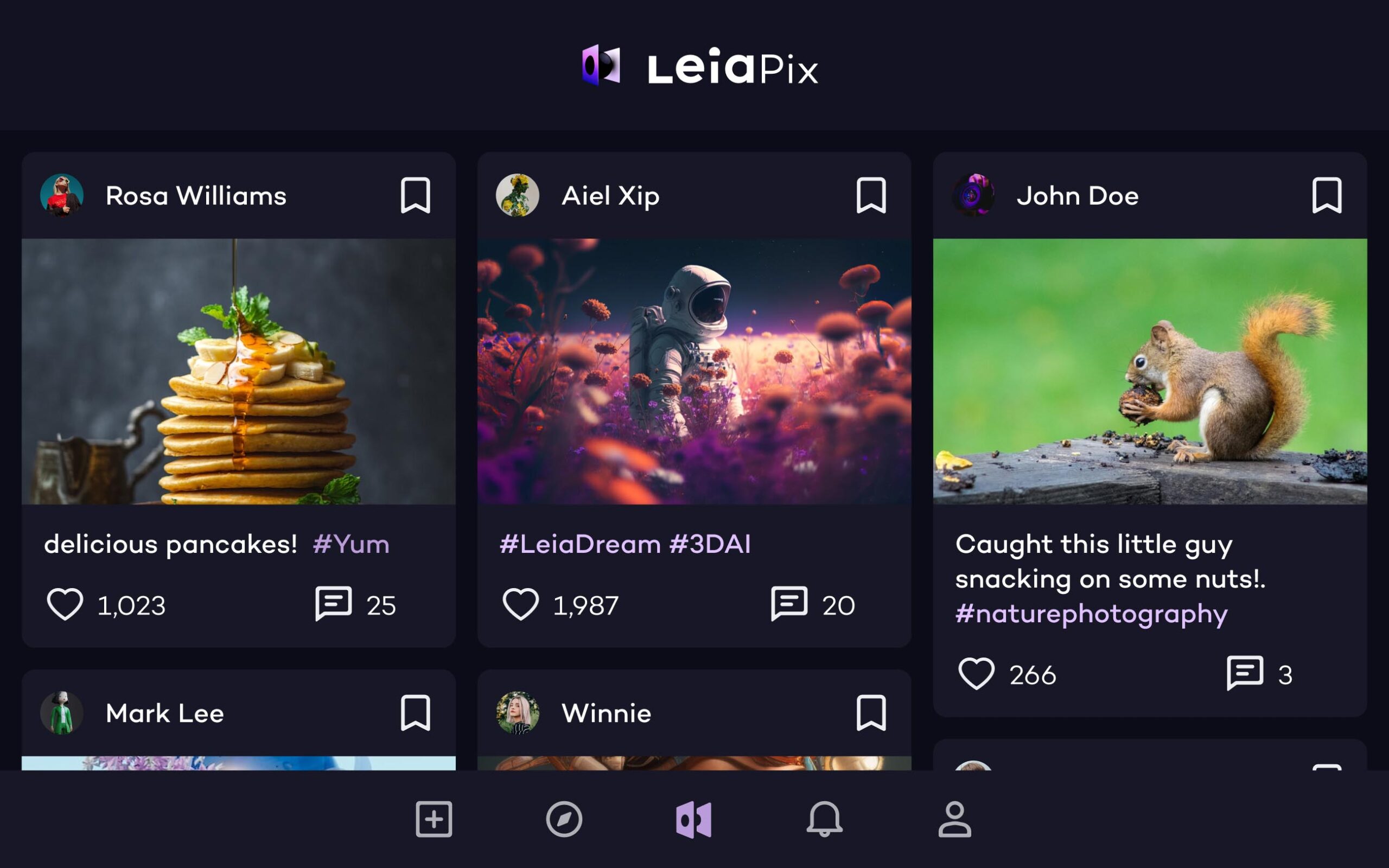
3D modeling and animation in LeiaPix – Image via LeiaPix
LeiaPix is renowned for its innovative approach to 3D AI animations. This tool also is updated frequently and is anticipated to receive a significant upgrade this year as well. While there’s no specific release date yet, the update is expected to continue the tradition of enhancing user experience and expanding creative possibilities.
The notable enhancements in Version 1.2 introduced the transformative Ken-Burns style Dolly Zoom animation. Thus, the upcoming version is set to push boundaries further.
Advanced features of LeiaPix
- Enhanced dolly zoom effects: Building on the Ken-Burns style Dolly Zoom, this tool might allow even smoother and more customizable zoom and pan effects.
- Expanded file format support: In addition to the Leia Image Format (LIF), there may be support for additional file types.
- Improved depth estimation: Enhancements to Leia’s depth estimation technology might enable more accurate and lifelike 3D animations.
- Performance boosts: Improvements may also include enhanced efficiency and speed of the web application, as well as bug fixes, to ensure a smoother overall user experience.
- Cross-device and session continuity: The tool might provide enhanced capabilities for working on projects across multiple devices or sessions. This can be particularly beneficial for professional creators.
- Additional export options: Beyond MP4 and GIF, there may be new formats available for exporting animations to suit various user needs and platforms.
Inspire your next project with these 12 creative examples of AI-generated art trending across the digital space.
The takeaway
In conclusion, as we stand on the precipice of this AI-powered creative renaissance, one thing is clear: the future of digital art and design is brimming with possibilities. The tools we’ve explored are just the tip of the iceberg, a glimpse into a world where human and machine creativity converge in a symphony of innovation.
So, buckle up, digital pioneers, and prepare to embrace the future. Experiment, explore, and let your imagination run wild. Dive further into the future of creation. Discover generative AI art tools that transform your wildest dreams into visual masterpieces!
Disclaimer: While these AI tool launches are highly anticipated, please note that specific release dates and features are subject to change based on development progress and company announcements. Stay tuned for official updates, and keep exploring the evolving landscape of AI!