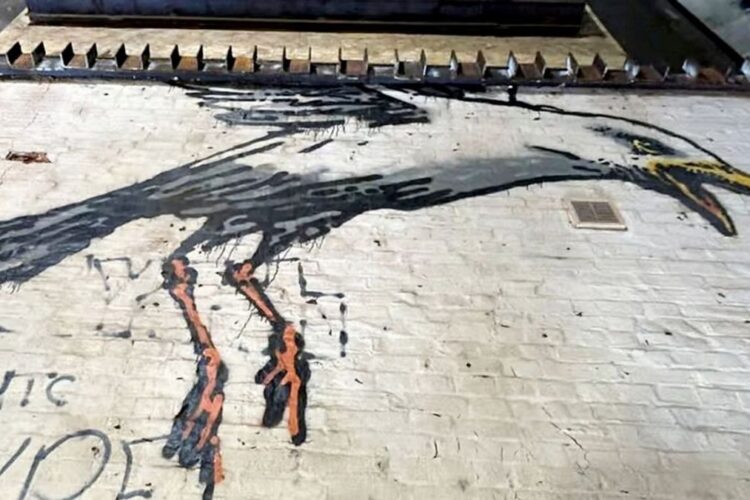
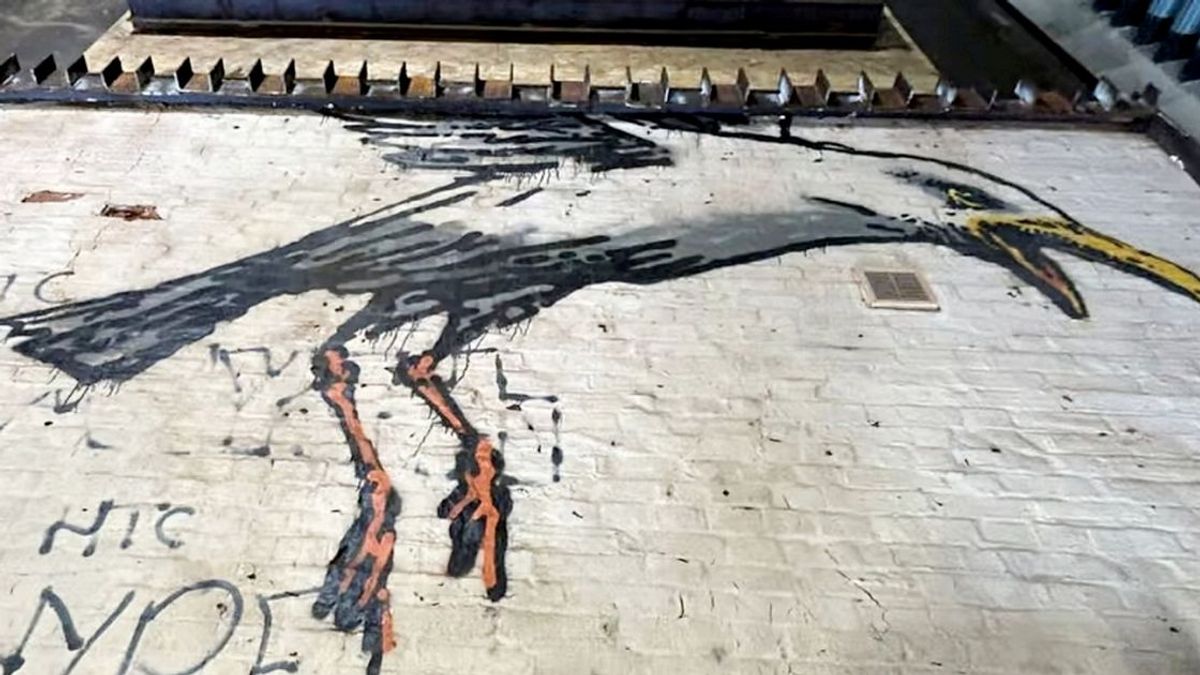
In the quaint town of Lowestoft, Norfolk, an extraordinary piece of art history is preparing to change hands. Created by the enigmatic street artist Banksy, the largest artwork ever conceived by this clandestine figure has been stirring both admiration and debate. Painted on a serene August day in 2021, a mural depicting a seagull’s whimsical interaction with a refuse skip has transcended its initial allure, becoming a beacon of cultural significance and now, a coveted asset expected to command millions.
The Journey from Public Exhibition to Private Sale
The artwork, a pivotal element of Banksy’s ‘Great British Spraycation,’ was not just a visual spectacle but a narrative woven into the fabric of Lowestoft. Weighing over 11.5 tonnes and split into two segments, the piece’s fate took a dramatic turn when structural damage to its host building necessitated a complex removal. Safeguarded in storage since its detachment, the mural’s impending sale, managed through a dedicated website, has ignited discussions far beyond the art world. With an estimated value eclipsing the initial £3 million anticipation, the sale underscores Banksy’s profound impact on the art market and the communities graced by his work.
Controversy and Community: The Dual Impacts of Banksy’s Work
The removal of the artwork has been met with mixed emotions. For many, the mural was more than an aesthetic addition; it was a source of pride and a tourist magnet, highlighting the transformative power of public art. Yet, the necessity of its preservation has also brought to light the challenges faced by those tasked with maintaining such significant pieces outside the traditional gallery setting. Owners of the mural have shouldered the financial and logistical burdens of its removal and storage, emphasizing the complexities involved in safeguarding street art of this magnitude.
Looking Ahead: The Future of Street Art in Public Spaces
As this significant piece of Banksy’s oeuvre prepares to find a new home, it prompts a broader reflection on the relationship between street art and community spaces. While the sale may draw criticism from purists who believe such works should remain accessible to the public, it also opens a dialogue on the sustainability of street art and the responsibilities of those who own the canvases upon which these works are created. In a world where art and commerce often collide, the story of Banksy’s seagull and refuse skip serves as a poignant reminder of the delicate balance between preserving art’s integrity and ensuring its survival.
As the sale process unfolds, the legacy of Banksy’s largest artwork will undoubtedly continue to evolve. From a cherished public spectacle to a prized private possession, its journey encapsulates the broader narratives of art’s place in society, the challenges of preservation, and the unending quest to balance public good with private interests.