
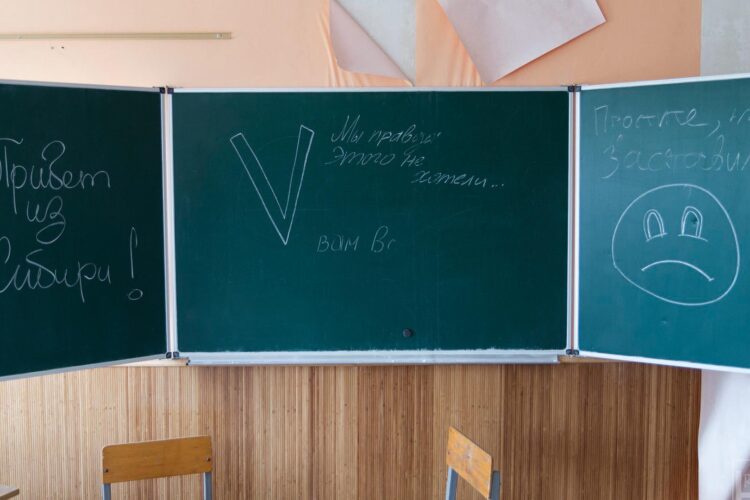
The Wall Evidence team sort through the materials and have divided the graffiti into four categories.
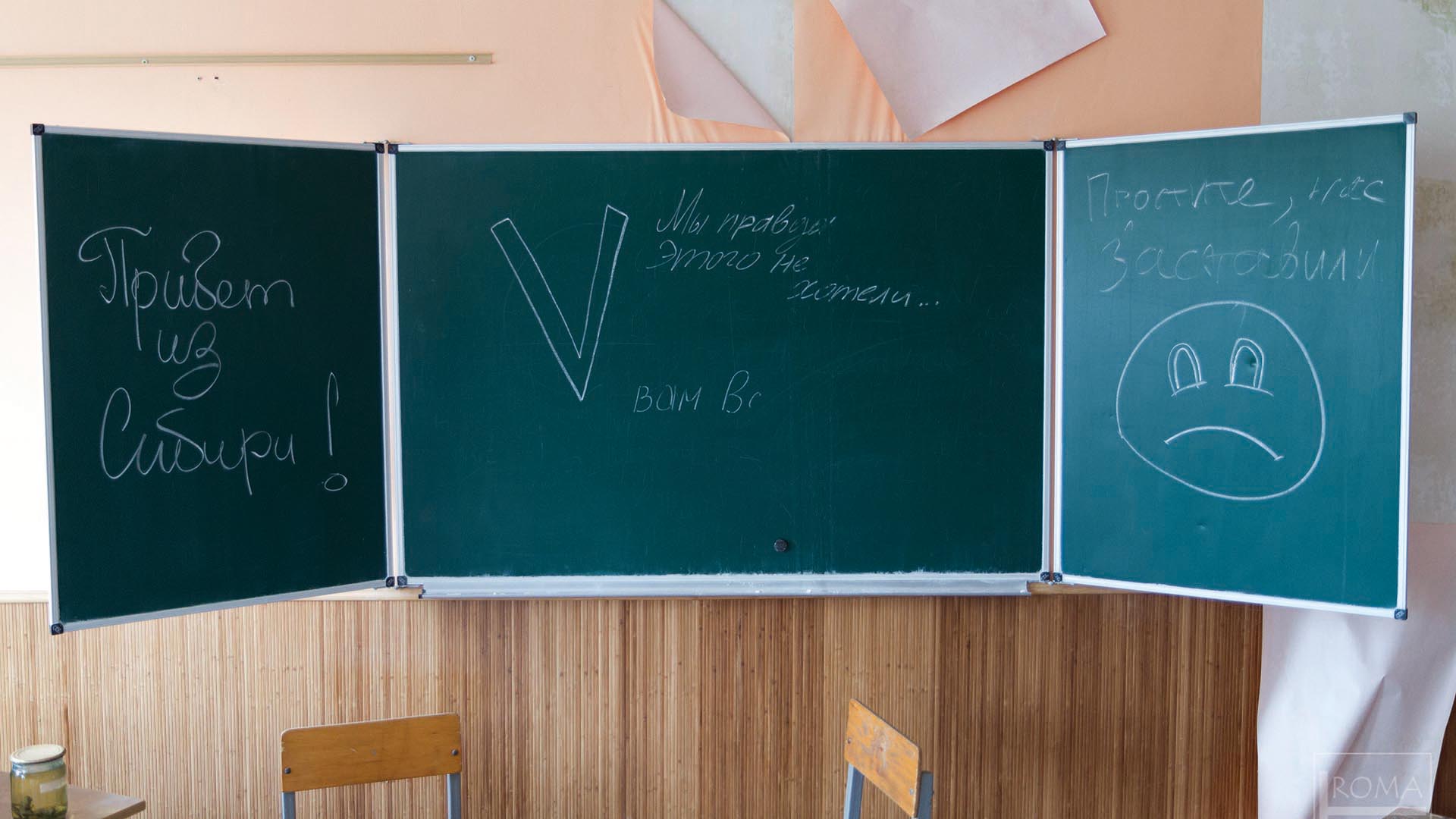
we were forced” – written on a school blackboard in
Gostomel, Kyiv region. Photo: Roman Timenko
Mizhvukhamy
The first is area divisions and information notifications. When the Russian army occupied a village, they would choose private houses as command centres and use schools as military camps. They would mark these buildings with a “Z”, symbolising “Za pobedu”, or victory, and would also leave announcements, such as curfew times for civilians.
The second is hate speech. For example, on the walls of a school near Kyiv: “This is where those Ukrainian orcs were manufactured.”
The third is political propaganda. Graffiti like “Life is good. Why join Europe?” and “Zelenskyy sold you to Nato”, left on a fence in Shevchenkove. These often appear alongside slogans harking back to the USSR, referring to Russia as the “Great Motherland” and “Brotherly Nation”. Many soldiers also leave evidence that they believe they are “fighting against the Nazis”.
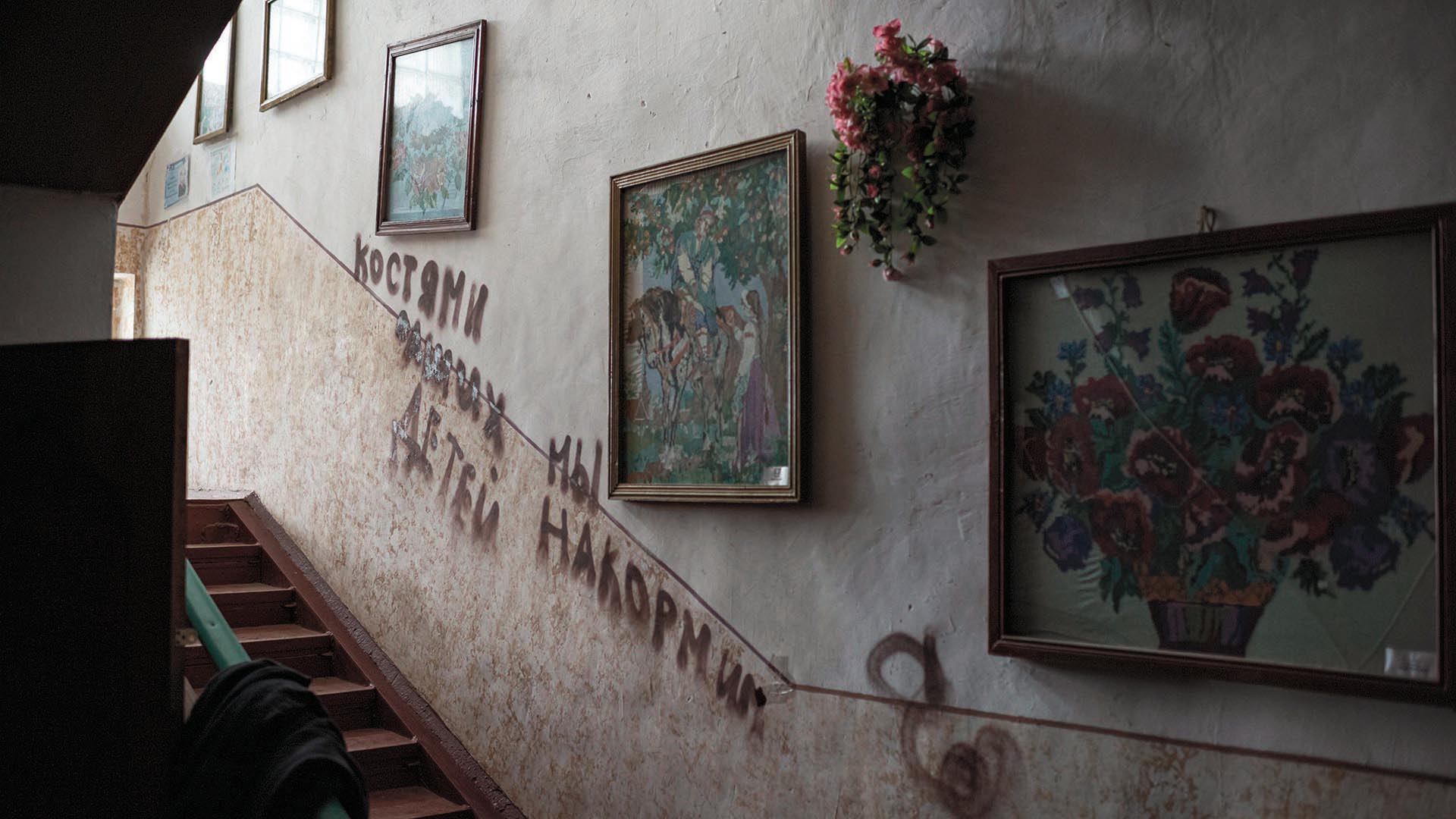
The fourth is avoidance of blame. In places, Russian soldiers leave messages of apology, sincere or not, claiming they have no choice.
“We will continue [the project] until Ukraine wins,” says Oleksii. “After the war, we can piece together a more complete picture of the war and leave behind the truth about this invasion for future researchers.”
Translated via Translators Without Borders, courtesy of The Big Issue Taiwain / INSP.ngo
This article is taken from The Big Issue magazine, which exists to give homeless, long-term unemployed and marginalised people the opportunity to earn an income. To support our work buy a copy!
If you cannot reach your local vendor, you can still click HERE to subscribe to The Big Issue today or give a gift subscription to a friend or family member.
You can also purchase one-off issues from The Big Issue Shop or The Big Issue app, available now from the App Store or Google Play