
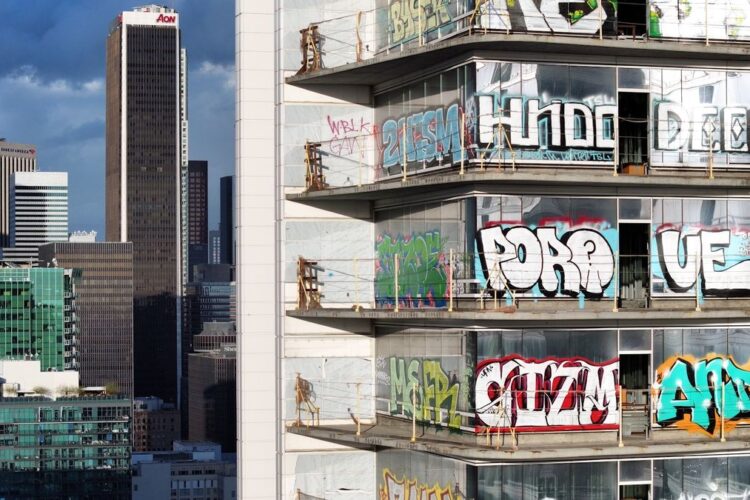
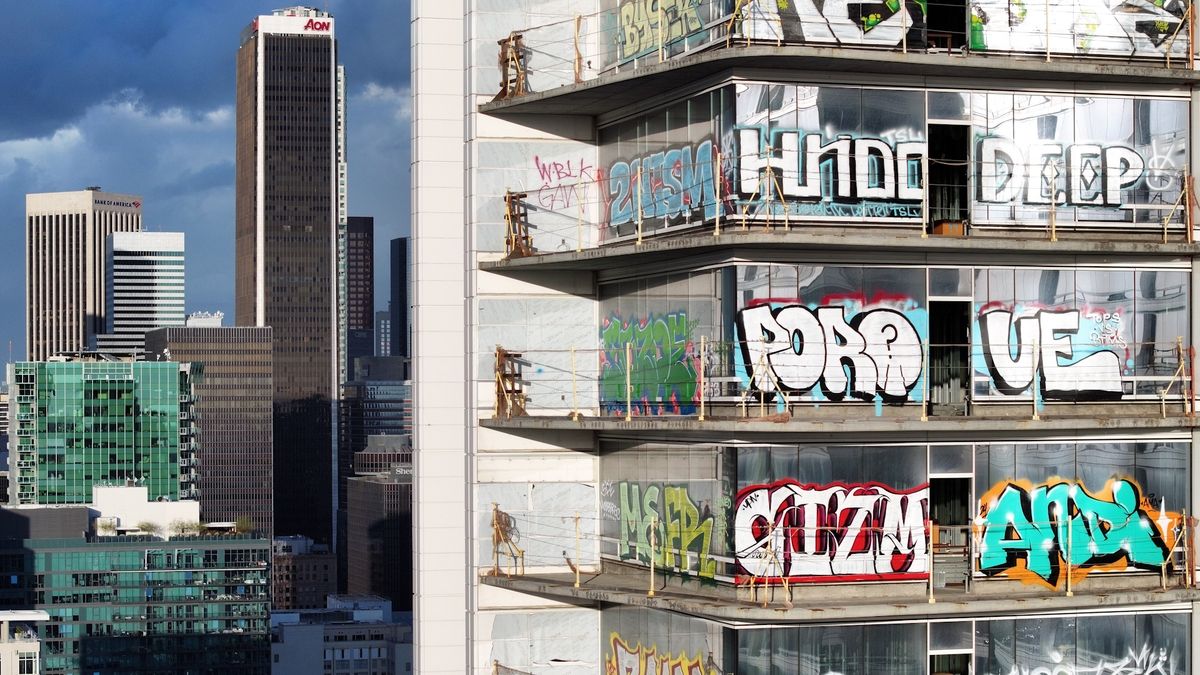
In the heart of Los Angeles, the Oceanview Plaza towers stand as unfinished sentinels in a bustling city, their incomplete structures serving not as a symbol of urban development, but rather as a canvas and playground for the city’s more daring and creative spirits. Once intended as a gleaming $1 billion testament to modern architecture and luxury, these towers have, since their abandonment in 2019, become the epicenter of a vibrant controversy involving graffiti artists, BASE jumpers, and the Los Angeles Police Department (LAPD).
The Unintended Canvas and Playground
Construction on the Oceanwide Plaza began with high expectations in 2015, but dreams crumbled when the China-based developer, Oceanwide Holdings, ran out of money. The towering skeletons that were left behind have since attracted a myriad of individuals, from graffiti artists seeking vast new canvases to thrill-seekers looking to parachute from the city’s newest high-rises. This transformation of the site into a hub for unsanctioned art and extreme sports has not only captured the imagination of locals and visitors alike but has also sparked a debate on the fine line between street art and vandalism.
Despite the efforts of the LAPD, which has dedicated over 3,000 hours of personnel time to address the illegal activities at the site, the Oceanview Plaza towers continue to be adorned with new layers of graffiti. The recent arrest of 18 individuals for crimes ranging from illegal gun possession to felony vandalism underscores the complex challenge faced by the city in policing the area. LAPD Chief Michael Moore highlighted the strain on the department’s resources, pointing out the necessity for increased patrols to deter further acts of vandalism and ensure the safety of the community.
The Strain on City Resources
The city’s struggle extends beyond the immediate legal issues, touching on broader concerns about public safety and urban development. Videos of individuals parachuting off the skyscrapers have gone viral, drawing attention and crowds, yet also raising questions about the security measures in place at such sites. The Los Angeles City Council is now considering a proposal to allocate $3 million to secure the premises. This plan includes installing a fence, clearing debris, and potentially hiring private security guards, in a bid to reclaim the site from its current state of lawlessness.
The controversy surrounding the Oceanview Plaza towers is emblematic of a larger conversation about urban space, ownership, and creativity. While some view the graffiti and BASE jumping as expressions of freedom and art, others see them as dangerous and disrespectful acts that compromise the safety and aesthetics of the city. The inability to find responsible parties associated with Oceanwide Holdings further complicates the city’s efforts to address the situation, leaving a void of accountability that has been filled by the community’s most bold and creative.
Between Art and Anarchy
As the debate rages on, the Oceanview Plaza towers stand as a stark reminder of the challenges cities face in managing abandoned projects and the creative ways in which such spaces can be repurposed by the community. The situation at the Oceanview Plaza is a microcosm of broader issues related to urban development, artistic expression, and public safety, reflecting the complex interplay between individual creativity and collective responsibility.
The LAPD’s ongoing efforts to contain the situation, coupled with the City Council’s consideration of significant security measures, highlight the city’s determination to address the challenges presented by the Oceanview Plaza towers. Yet, as new graffiti continues to appear and videos of daring jumps circulate online, the towers remain a symbol of defiance, a monument to the city’s vibrant, if contentious, spirit.
In the shadow of the unfinished Oceanview Plaza towers, Los Angeles finds itself at a crossroads, navigating the delicate balance between artistic freedom and urban order. As the city contemplates its next steps, the towers loom large, a testament to the unfinished stories of development, ambition, and creativity that define the urban landscape.